
Welcome to this month’s brief discussion of pectoralis muscles.
The pec muscles are important to chest flexion and can cause a lot of undue issues in the back (along with other muscles… but, like the psoas muscle, usually it’s these guys).
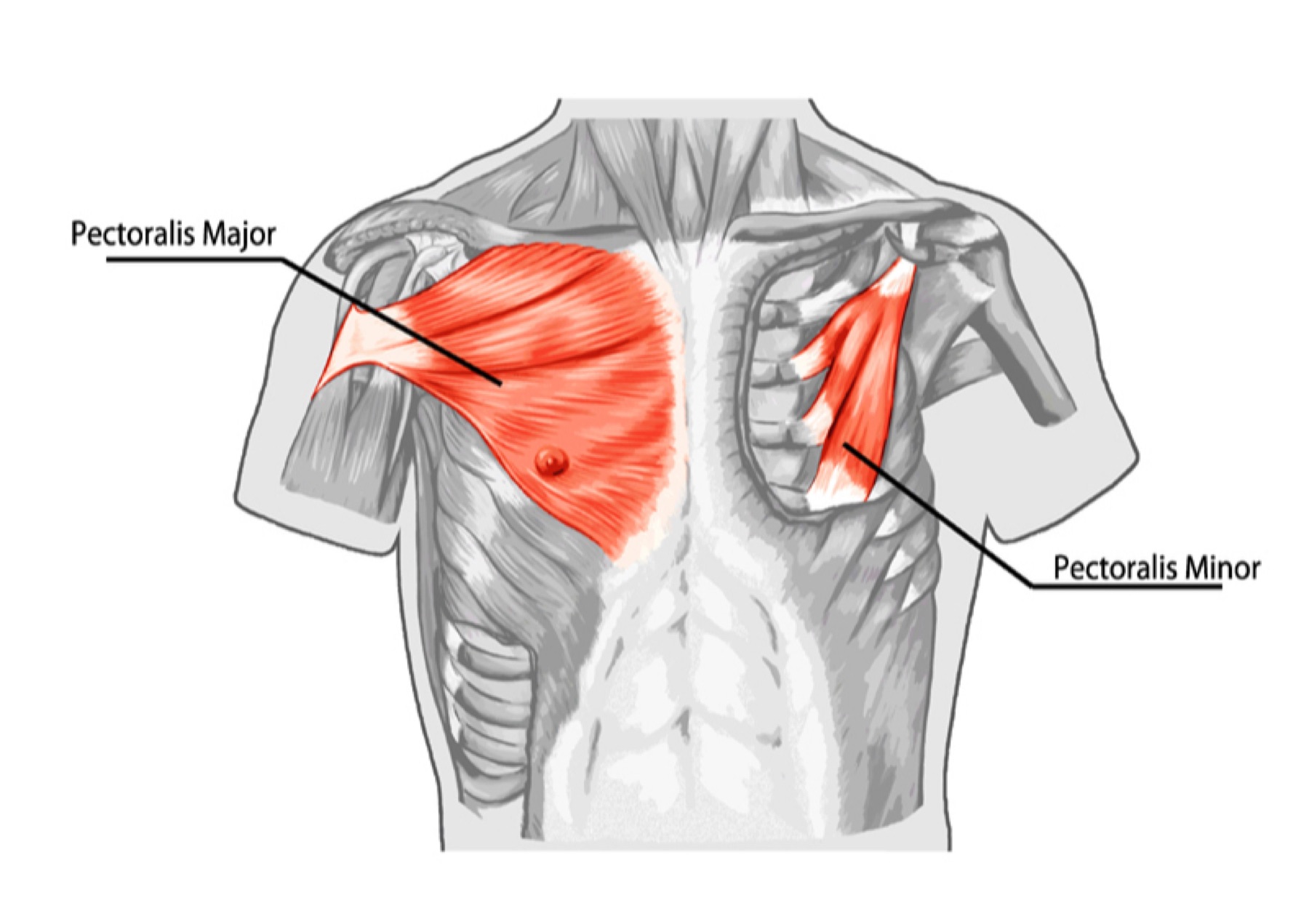
The pectoralis major muscle attaches along the sternum and collar bone, and twists towards its insertion in the upper arm. This guy can handle a lot of load, likes to be strong and likes to be tight.
Pectoralis minor attaches to ribs 3–5 and moves the front of the shoulder blade. This guy helps more with shoulder blade movement, as well as with rib movement while breathing.
When tight, these guys pull the arms and shoulders forward. Against the upper back muscles they are far stronger, and will win most of the time. Poor posture (easy in any occupation where our arms come forward, including desk work, massage therapy, even electrical), poor sleeping habits (sleeping with an arm under or over your head) and stress (when stressed, the body likes to curl into the fetal position) can all make this worse.
Why care? Usually because the upper back is in pain — and while it’s the squeaking wheel, these guys are a major contributor to the problem. The brachial plexus, a large nerve branch, also comes into the arm under these guys. If they’re tight, there’s a chance they can cause numbness down the arm as well.
What should you do? First thing is STRETCH. Remember from our last post about the psoas: a stretch should be a little uncomfortable BUT NEVER PAINFUL. If it’s causing pain, there are usually other ways to stretch the muscle.
One of the easiest stretches is to roll a long bath towel up, place it along the length of your spine, and lie on the towel with your arms stretched out about 90 degrees from your body. It’s a gentle and easy stretch (also lazy, which I always support) that allows some opening in the chest.
Another easy pec stretch is in a doorframe. Stand with elbows bent and arms at about 90 degrees, one on either side of the doorframe, and step through until you feel the stretch. If you feel pain in the shoulder, readjust — sometimes it’s stepping too far forward, or letting your shoulder bend too much. You should feel the stretch in the chest, not pain around the shoulder joint.
Hold stretches for AT LEAST 30 seconds, ideally once or more a day. For both stretches, try different arm angles than 90 degrees to stretch all parts of the muscle.
Once you’ve really opened up the pecs, ideally you’d move on to strengthening the upper back muscles. It’s not advised first, because two tight muscles competing for dominance can cause compression issues and injuries. At least, that’s my trained two cents.